E10 vs E5: can you mix them and which cars need E5?
In the E10 vs E5 choice, E10 is standard 95 octane petrol with up to 10% ethanol, while E5 is super grade with up to 5%. About 95% of petrol vehicles can use E10, including every new car since 2011. Mixing them is safe in a compatible car. Check yours on GOV.UK.
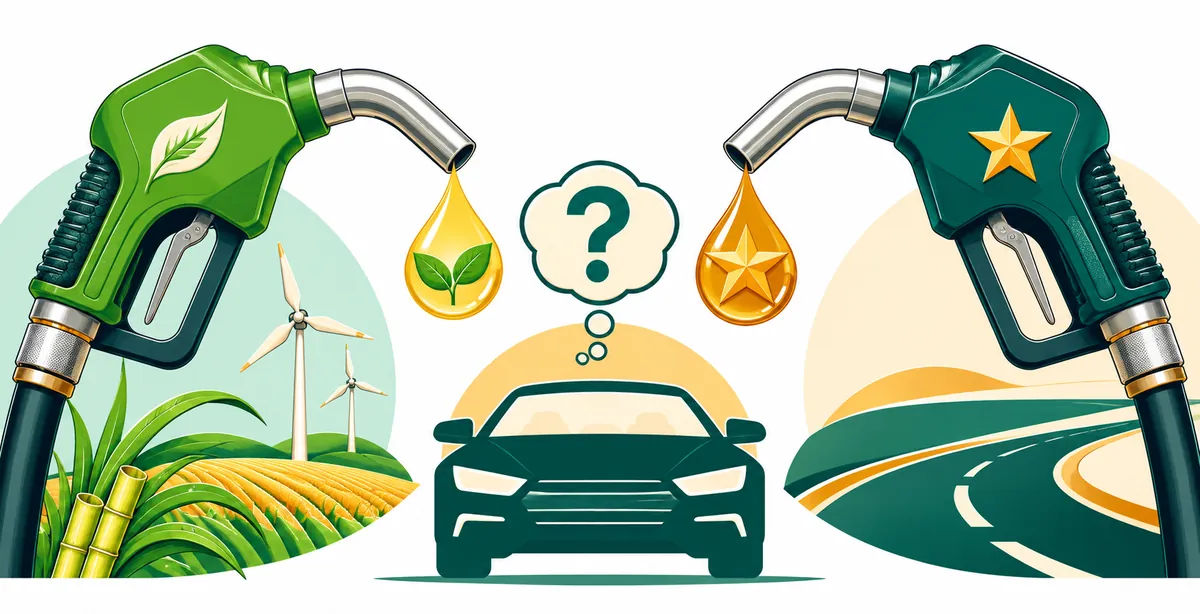
Standard grade petrol in Great Britain became E10 in September 2021, and Northern Ireland followed in November 2022. E5 did not disappear: it stayed on sale as the super grade, usually labelled 97 octane or higher.
This guide explains the difference, which vehicles should stay on E5, what happens if you mix them or fill up with the wrong one, and how to decide whether the higher price of super unleaded is worth paying.
E10 vs E5: what is the difference?
E10 contains up to 10% renewable ethanol, and E5 up to 5%. The higher ethanol content lowers carbon dioxide emissions from petrol cars. Standard E10 is 95 octane, while E5 is sold as a super or premium grade of 97 octane or more.
The change only affects petrol. Diesel is not part of it, although standard diesel already contains a share of biodiesel.
Which cars can use E10?
Government figures say almost all, about 95%, of petrol vehicles on the road can use E10, and all new cars made since 2011 are compatible.
Vehicles that may not be compatible include classic, cherished and older vehicles, some specific models from the early 2000s, and some mopeds, especially those of 50cc or less.
The quickest way to be sure is the free GOV.UK E10 checker, which covers cars, motorbikes and mopeds by make and model. If your vehicle is not listed, or it is a classic, the government advice is to keep using E5. Your handbook or the manufacturer can also confirm it.
Can you mix E10 and E5?
Yes, if your vehicle is E10 compatible. The government says it is perfectly safe to mix them in the same tank, or to fill up with E5 if E10 is not available.
If your car is not compatible and you put E10 in by mistake, you do not need to drain the tank, unlike putting petrol in a diesel. Fill up with E5 next time. Using E10 for a long time in a non-compatible vehicle may cause harm, so do not make it a habit.
Price gap between E10 and E5
Super unleaded costs more per litre than standard E10 at almost every forecourt, and the gap varies by brand and area. You can see it for your own area by switching fuel type on the postcode price finder on our home page.
For an E10 compatible car, the manufacturer's recommended grade is what matters. Paying more for E5 may not save you money overall. Some drivers notice slightly lower fuel economy on E10, so if you want to test it, log a few tanks of each with the MPG calculator and compare the cost per mile calculator results.
Where to buy E5 petrol
E5 remains available as the super grade at many larger filling stations. Some small, rural or remote forecourts may only sell one petrol grade, so if your vehicle needs E5, check before a long trip. The PetrolPence price finder lists stations that report a super unleaded price.
Tips for classic car and moped owners
Use E5 if your vehicle is not on the checker. Ethanol can absorb moisture and affect some older seals and fuel lines, so if a classic will be laid up for months, follow specialist club or manufacturer advice on storage and fuel. Keep receipts showing the grade you bought in case of a later problem.
Does E10 affect fuel economy?
Ethanol carries slightly less energy per litre than petrol, so some drivers see a small drop in miles per gallon on E10. How much depends on the car, the driving and the weather, and it is often too small to notice against normal variation from traffic and tyre pressure.
The fair test is cost per mile, not price per litre. Fill up with E10 for a few tanks, note the miles and litres, then do the same with E5. Put both into the MPG calculator and the cost per mile calculator. For most compatible cars, cheaper E10 still works out lower per mile, but your own numbers are the ones that count.
E10 and E5 at the pump: how to tell them apart
Pumps and nozzles in the UK carry standard labels: a circle marked E10 for standard unleaded and E5 for super grade. Your car's filler flap or handbook may show the same symbol. Read the label on the nozzle rather than relying on the colour of the handle, which varies between brands. If a small forecourt only sells E10 and your vehicle needs E5, use the price finder to locate a station that lists super unleaded before you set off.
Sources
Department for Transport, E10 petrol explained (updated 2 November 2022), checked 23 November 2026.
GOV.UK, Check if your vehicle can use E10 petrol, checked 23 November 2026.
Frequently asked questions
Is E10 bad for older cars?
It can be for some classic, cherished and early 2000s models. Long term use in a non-compatible vehicle may cause harm, so owners of those cars should keep using E5.
What happens if I put E10 in a car that needs E5?
You do not need to drain the tank. The car should run normally, and you should fill up with E5 next time.
Is super unleaded E5?
Yes. In the UK the super or premium grade of 97 octane or more is sold as E5, with up to 5% ethanol.
How do I check if my car can use E10?
Use the free GOV.UK E10 vehicle checker and pick your make and model. All new cars made since 2011 are compatible.